View the evidence...
The Case for apartheid: Evidence Gallery Part ONE
Beneath The Veneer.
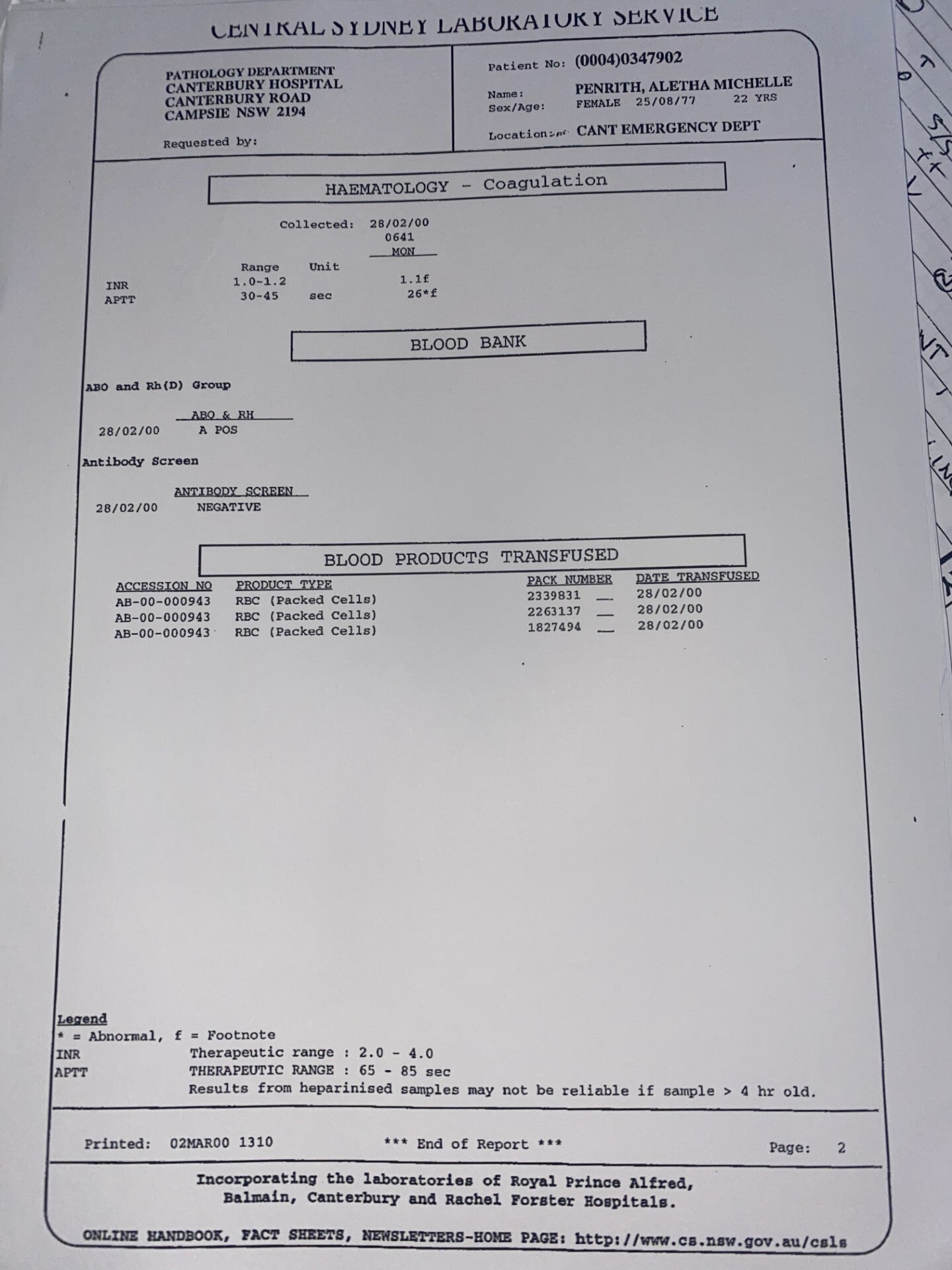
Personal history of reproductive violence:
Miscarriages, malpractice and the state.
' In my youth I was often beaten until I lost pregnancies. I was raped, offered to other men for sexual favours. I lost at least two, maybe three pregnancies during my early twenties. The NSW government compensated me for violence but denied miscarriages were the result of beatings during pregnancy. I received $10,000 compensation- $9963 was claimed by the NSW. government for debts. My cheque arrived between 2011-2013, and I received approximately $37. I had no say in this. The state removed the money before I even knew. It was a cruel and degrading act. The perpetrator, who was also the paternal parent of my three children, alleged he had participated in defence as a cadet. Specialising in torture. I believed it at the time. He degraded my body, my mouth, and would hold a mirror to my genitals to expose how much my body had opened after pregnancy to justify violence and mistreatment.
An aboriginal women's center , funded by the government, assisted in the claim. They have since stated they do not have my documents on record at all from this period. Or even more recent documents since 2024.
I am still humiliated today, and the violence against my foetuses continue to be denied by the state. An act of victimisation and reproductive enslavement.
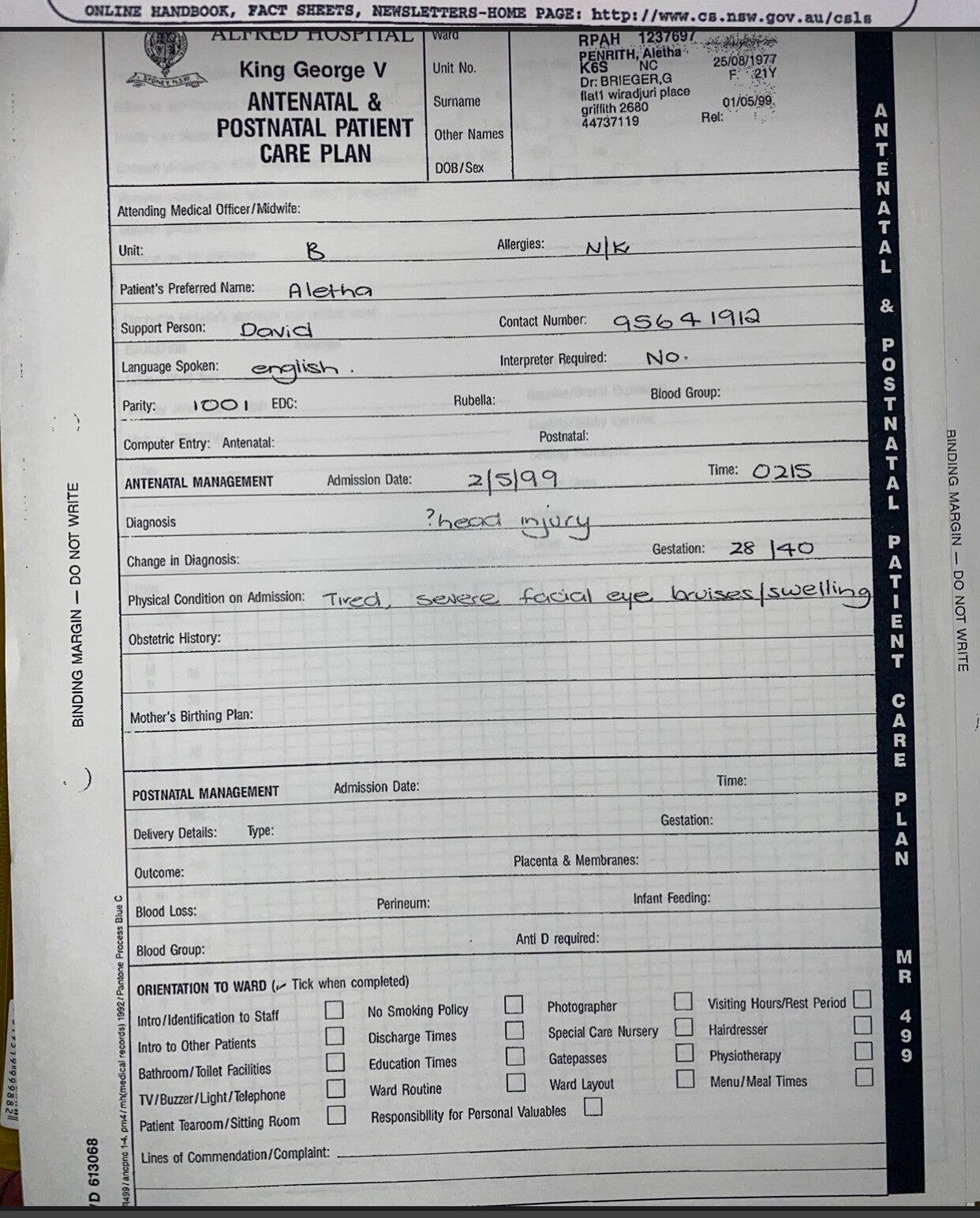
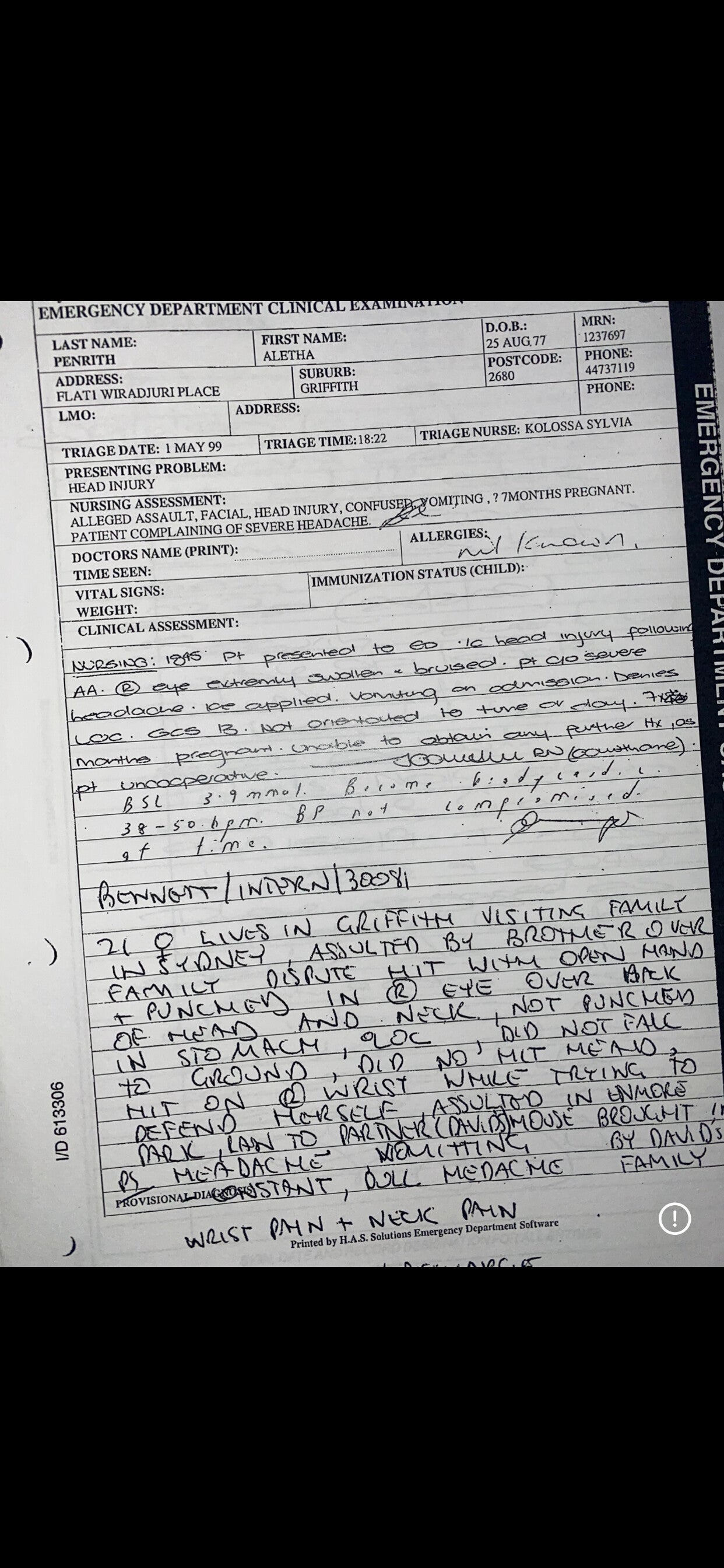
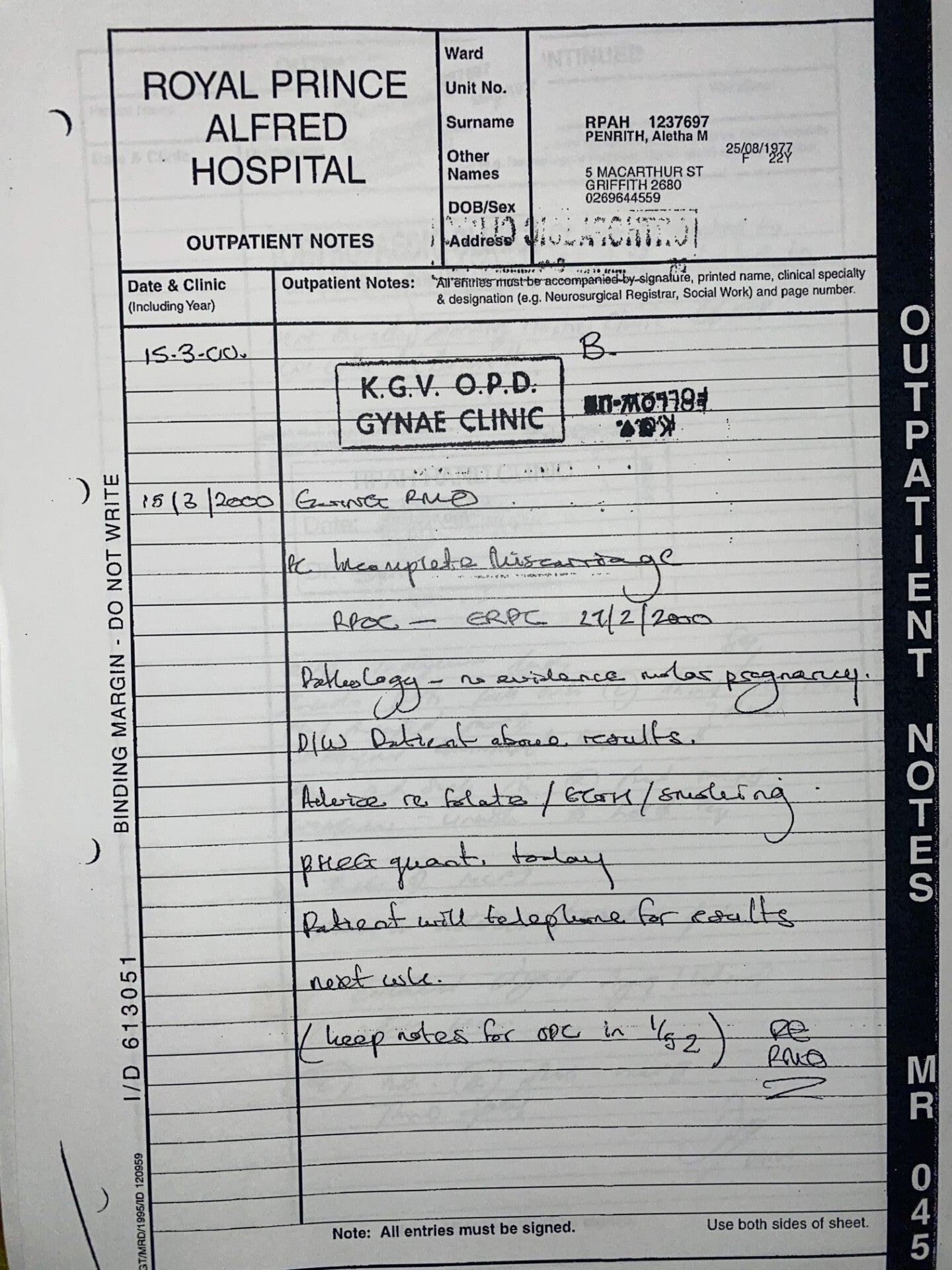
Evidence Gallery #2 ' Raped during my Master of Public Policy Degree 2016. Another pregnancy terminated through violence'.
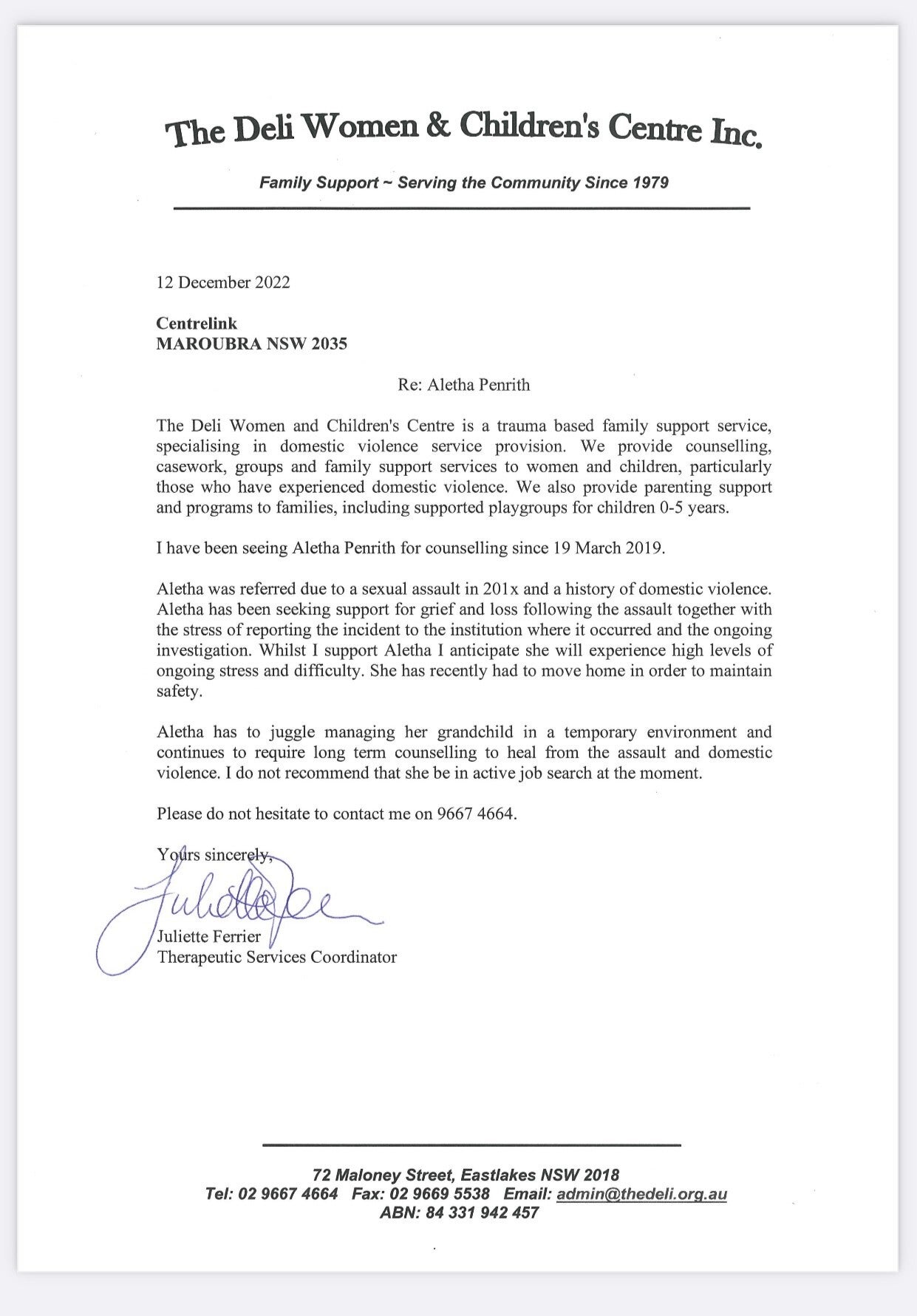
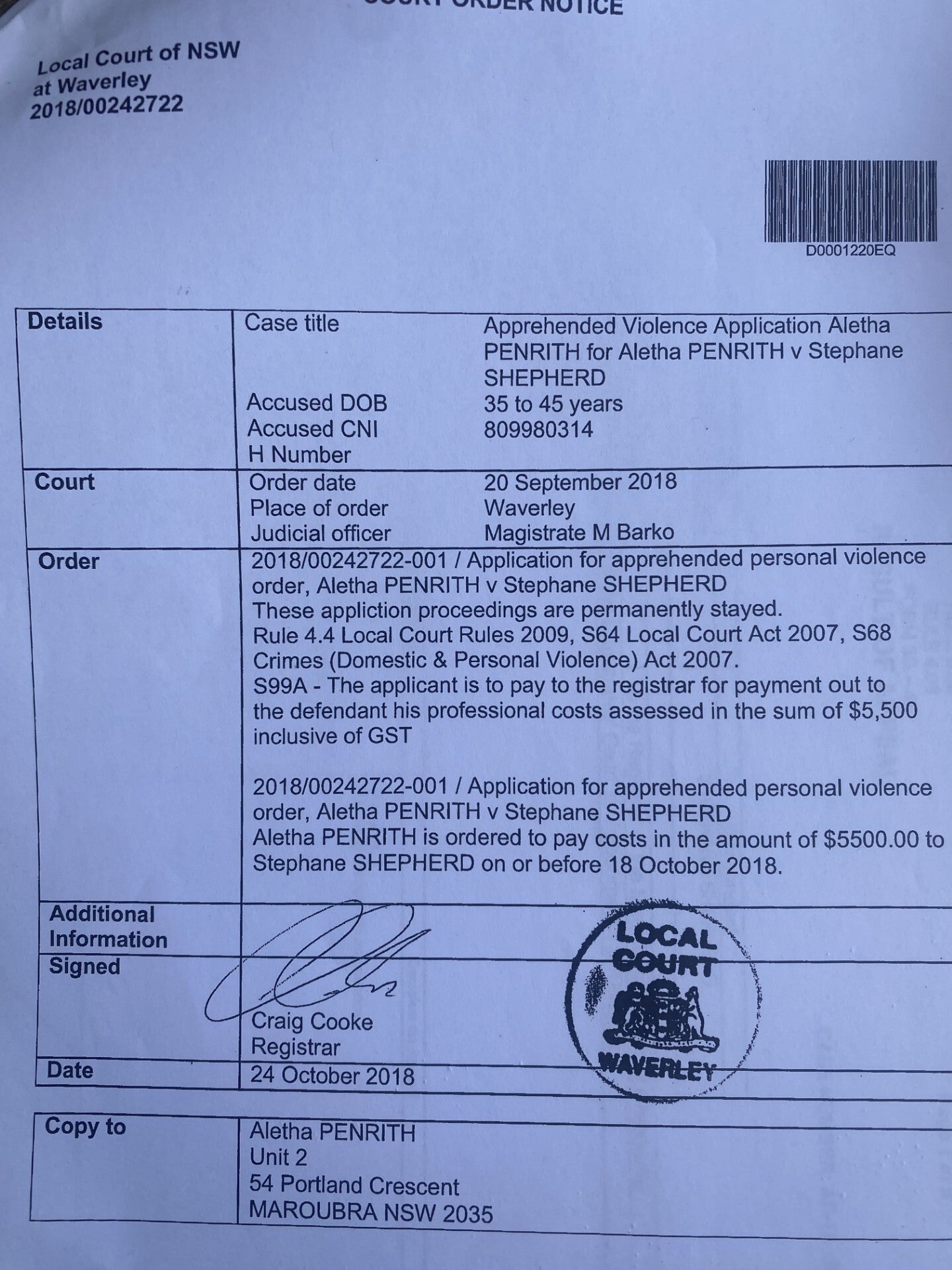
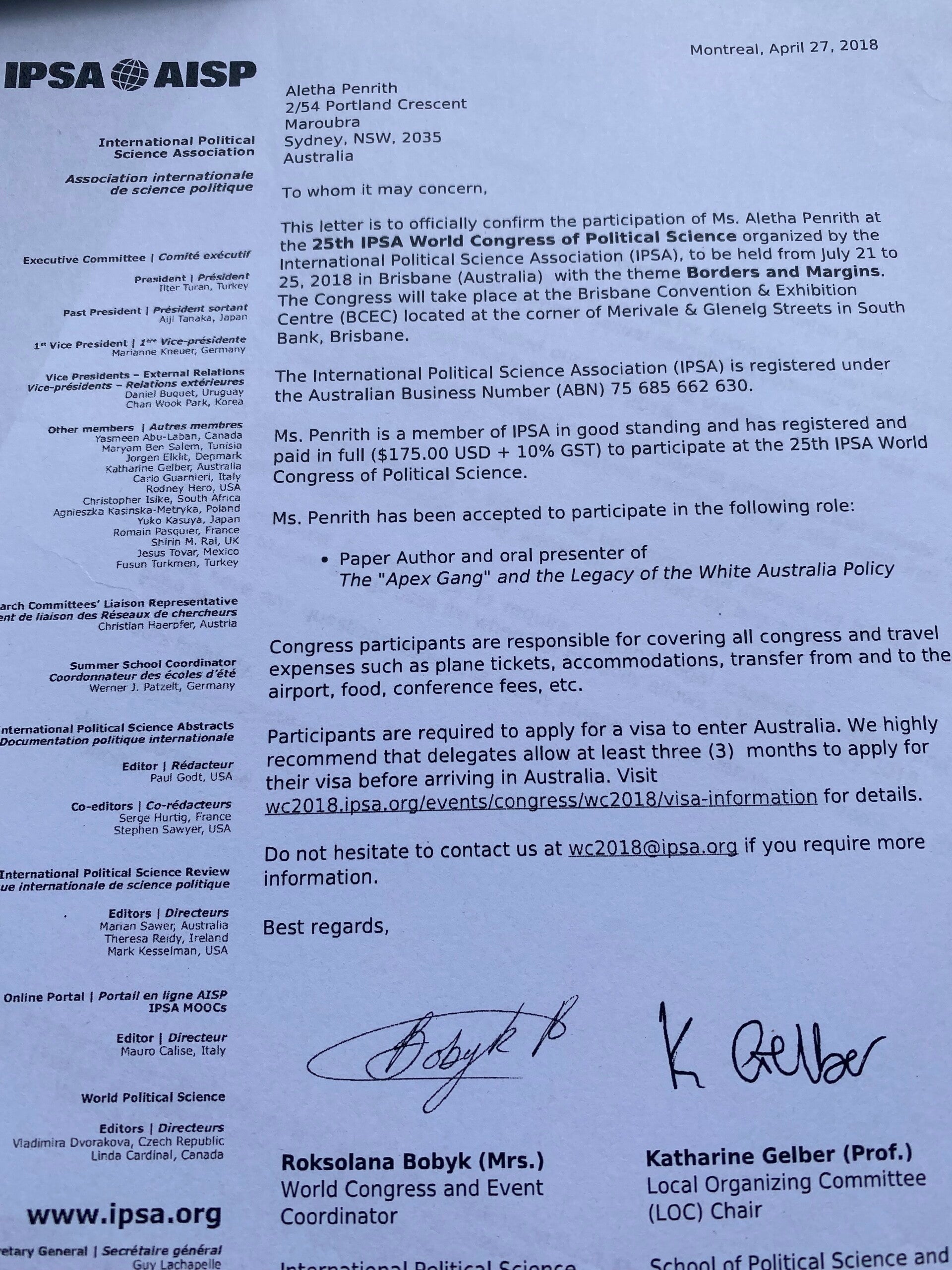

I undertook a Master of Public Policy. I would have been the first person in my immediate family to achieve higher education at this level. During my studies I met a lecturer who worked with Home Affairs Australia. He was a recipient of a Full Bright Scholarship. A psychologist and media graduate. He sexually assaulted me impregnating me. It appeared he had a direct connection with my child's father, and during the sexual assault falsely stated his birthday was the same day as my deceased brother who had taken his own life. I was targeted and traumatised until I lost the baby. Once again the existence of any pregnancy was denied. The lecturer weaponised the state to incriminate me. The state once again victimised me and denied me compensation for injury and acknowledgement of loss of pregnancy.
At first I was in shock. It became apparent that his attack on me was premeditated. He even used facial expressions of my children's father during the sexual assault. His colleagues intimidated me out of university. I have a $100,000 HECS fee, while the university received payment uncontested- therefore profiting from sexual assault. I studied for years to achieve the right to undertake my Masters degree as a single mother raising two daughters. The devastating impact also affected my children.
I placed a SARO (sexual violence report online) through the Wirringa Baiya Women's legal service.
Reproductive violence was repeated and I was denied legal representation to challenge state violence and its semi funded corporate partner, the university of Sydney. Finances were instrumented to humiliate, incriminate and destroy my career in public policy. I feared that during this time as a woman experiencing perimenopause, I would never be able to become pregnant again.
The perpetrator alleged he had a sexually transmitted diseased, indicating that as a result of the sexual assault, I could not longer become pregnant, and he did not get me pregnant. I am currently pregnant to Elon Musk and very afraid of losing another baby. The perpetrator lecturer lied to punish and demean me. He also worked with prison wardens and formed part of the prison industrial complex.
Segregation was enacted by the university to separate me from other students after I placed a complaint to the perpetrator's colleagues and superiors. I was accused of intimating white staff and told officially I could not use computer spaces in the Old Teachers College. During the 'independent review' done by a lawyer who was a representative on the board of the University's law Council, the insults about my mouth by my three children's' father were repeated by the rapist's superior; CEO of the National Centre for Cultural Competency. They were both research award recipients of $220,000 during the time I made the complaint.
It became evident that the perpetrator had a prior connection to my family. None of which was disclosed to me at any time.
Neuropolitics and Blackness: a blog on my deceased brother, Allan Murray. Tortured victim of the State and its proxies.
” Thus, in adopting a line of a nonracial approach, the liberals are playing their old game…claiming a monopoly on ‘intelligence and moral judgement’ and setting the pattern and pace for the realisation of the black man’s aspirations”.
– Bantu Steve Biko
There are certain people that I do not fuck with. That’s not a point of negotiation. I have been considering this within context of whatever notion I have inherited about the social contract. For those unfamiliar with the idea of a social contract, it was Rousseau, esteemed French philosopher and abolitionist who wrote ‘The Social Contract’ as an early treatise for human rights in 1762. Dave Chappelle has explored this concept and queried ‘…what role do I have to play in your self image’. Cornel West wrote explosively about Democracy and its failures. All three are initiating a dialogue about collectivity and power. Who has it. Who does not. What shapes it. How it is or isn’t distributed, and on what terms. Prefacing Bantu Steve Biko, I support and believe in the democratic project. Later this conversation will turn to network governance, and multilevel governance, but for now, it is Biko’s belief in the democracy project that I wish to turn, before discussing relative tools of democracy inclusivity and centralised technology as being among its great flaws. It is not a conversation for childish individuals stomping their feet, screaming down constructs. Of course, that is a part of what may come from it. But overall, as we discuss the idea of Biko, I hope to convey something larger, more concerned with finessing plurality.
Biko’s democracy is both a sustainable and radical concept. More than this, it is very relevant for evaluating the success of Black Lives Matter on institutions we are all, in some way or other, contracted to. Not least of all because his life ended at the hands (and feet) of vile police brutality in the very public colosseum we refer to as a ‘civic’. Regardless of the institution, his beautiful black body lay contorted, disfigured. I want to discuss Biko, because when a black man dies for justice, it is never, as Ta-Nehisi Coates recently wrote, a slogan. And a black man almost always dies for justice, or lack thereof. Throw away societies simply give legitimacy to it, refurbishing it as a new contested norm, when in fact it’s always been the case.
What are we repeating and failing?
A quick thought for my deceased brother, a man who was both African- American and Aboriginal Australian and who took is own life under what Biko noted as desolation. Allegedly. On one occasion my two brothers had a conflict about a Sam Cook song. One of them with African-American blood, for we shared the same father. The other, without. They disputed the use of the word ‘greyhound’ which became an clear indicator of their inherent differences. The now deceased brother saw triggers and flags identifying his history as a man with an African-American grandmother. He argued that also embedded in the songs subliminal was his history. A narrative speaking to the truth of slave captives in the South (a story that has been more recently captured in Colson Whitehead’s book ‘The Underground Railway’), The other brother argued that the song spoke strictly to catching a greyhound bus service back to his sweetheart. The latter drew conclusion that this was an early sign of our deceased brother developing a mental health issue, pre-incarceration.
It was not. It was the construction of it. My deceased brother simply acknowledged his history in a society that socialised him as being something he was not. That denied him his right to expand the narrative and include any correct evaluation of his history, or the global history of slavery. This type of psychological attrition is historically a war tactic. Fanon spoke to it. And Biko embedded the reality of it in is life and its work. “Socialization” is brainwashing preceded by institutional violence. It is Neuropolitics. For Biko black consciousness was undeniably at the heart of his struggle for political liberation. He established the South African Students’ Organisation (SASO) after former membership with the National Union of South African Students, an organisation which was multiracial and eventually banned his membership after critique of his pro-black consciousness agenda. As Sir John Henrik Clarke noted in the U.S ‘ To control a people you must first control what they think about themselves and how they regard their history and culture. And when your conqueror makes you feel ashamed of your culture and history, he needs no prison walls and chains to hold you.’. Even within multiracial anti-apartheid , whites failed to deconstruct their own racial privilege , centering whiteness and validating white intelligence above the intellectual capacity of Africans as a social, political, economic and racial pattern. Thus was the point of severance.
In my family this has certainly been the case. And it has resulted in death of those of us with African ancestry, who celebrate our black consciousness, on more than one occasion.
September 14th, 1977 the Nationalist Party driven declaration of Biko’s death was that it was no-ones fault. A thirteen day inquest delivered the verdict via Magistrate Prins in spite of clear wounds on Steve Bantu Biko’s body. This declaration was common in apartheid South Africa of many black lives. In 2020 Breonna Taylor and George Floyd demonstrate we still fight for Black Lives to matter. And I continue to mourn my brother and unborn child in the face of denial, and ongoing patterning that denies our right to liberation, and who celebrate the fact, from the local community, to the highest echelons of global power. That this occurs across democratic institutions, by political elites afraid to interrogate the reality of their failures and reform, disyfunctionalises democracy and obscures the social contract.
Notions of socialism were thought to be the antidote. That is a lie. There is no country existing on the planet where socialism has successfully prevented the racialized murder, exploitation, discard of, or even contempt for, black lives. Nor has socialism been successful in or of itself. In the absence of economic hierarchy, institutionalized racial patterning thrives. Anti-blackness prevails. Anti-African-ness is a global disease. Network governance or social network governance is now its witness.
And in some cases, it’s collaborator.
Social media provided positive and negative examples of network governance in feminism #MeToo, in Indigenous rights and environmentalism #IdleNoMore, in multilevel governance regarding various levels of council and government particularly with respect to health and Covid-19 #Covid19. None of these have been more prominent than #BlackLivesMatter. While these are primarily situated in theorising that grew out of Ostroms’ notion of network governance work in environmental theory, social network governance is primarily utilized as a tool to explore and evaluate social media networks. The former is concerned with the administrative networks of government and on most occasions, cooperative institutional co-management. Problems identified relate to power, for example bottle-necking, top down approaches, centralization of government and other forms of concentrated power. In a 2008 journal article published in the International Journal of Commons, Carlsson and Sandstrom wrote “Building institutions is a matter of trial and error, as no blueprint exists for the endeavour. However, research has progressed. We know more about how to ‘cope’ with the tragedy of the commons…there is no such thing as ‘the best’ institution that once and for all would secure a sustainable utilization of common resources “, however, reports on the Rwandan genocide exploring media and its participatory role in ethnic cleansing clearly demonstrate the need for a baseline recognizing cruel and inhumane forms of militarized monopoly. Indeed, the U.S.A’s Anti Torture Act would make such corroborations highly criminal across multi-actor structures. President Lyndon Jonson’s administration understood as much when he gave his speech to Howard University, and devised to decentralize urban policy. Actors influencing social policy through social capital are mechanistic factors.
To return to Steve Biko, and to understand the role and importance of actors, we need to understand the way the world responded to his death. A number of security council meetings were instrumented post 1976 Soweto riots, resulting in Chapter VII of the United Nations Charter and included codes of conduct introduced for Western businesses operating in South Africa. Profiting from apartheid led the U.S government to divert their focus from absolute unilateralism in the wake of Biko’s death. These factors are worth consideration in social media network analysis also. A substantial societal contract across government and governance networks cannot exist and remain sustainable without acknowledgement of these factors in world history. And as far as neuropolitics and anti-blackness, it is also worth noting the institution of apartheid was founded in Australia with all hopes of producing and reproducing whiteness, the image of a pure Aryan race, or at least one whitening to become as much.